Luxury Van Rental in Delhi: Premium Group Travel & Force Urbania Services
Moving eight executives from Aerocity to a Gurugram conference in separate cabs costs more, creates convoy chaos, and puts your schedule at the mercy of five different drivers. Moving a visiting delegation from IGI T3 to their hotel in a standard tempo traveller signals exactly the wrong thing before a single handshake.
Premium group travel in Delhi has one core problem: the vehicles that offer genuine passenger comfort have historically been either too small (MPVs capped at 7) or too crude (goods-origin tempo travellers with bolt-on seats). The Force Urbania closed that gap. Combined with MPV options like the Kia Carnival and Toyota Vellfire for smaller clusters, Delhi now has a functional luxury van category that holds up against Singapore or Dubai ground transport standards.
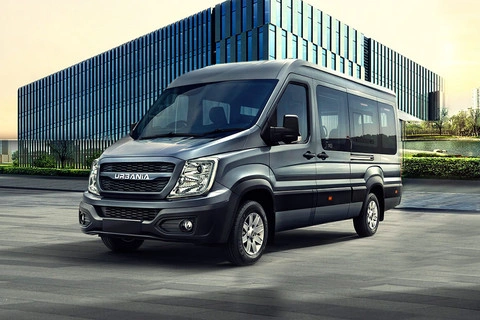
The Technical Shift: Why Force Urbania Leads the Premium Segment
The Force Urbania is a monocoque-chassis van. This distinction separates it from every previous Indian tempo traveller, which used a body-on-frame construction borrowed from load carriers. Body-on-frame vehicles flex under lateral stress, transmit road vibration directly into the cabin, and require a high step-up that creates an awkward boarding experience for passengers in formal wear.
Monocoque construction integrates the body and chassis into a single rigid shell. The practical result: NVH (Noise, Vibration, Harshness) levels that allow normal conversation at highway speeds without raising your voice. On the Delhi-Jaipur NH48 or the Dwarka Expressway during peak traffic, this difference is felt within the first ten minutes.
Safety specifications justify the classification as a premium vehicle:
- Dual front airbags as standard across variants
- ABS with EBD on all four wheels
- ESP (Electronic Stability Programme) — critical when a fully loaded 17-seater takes an expressway curve at speed
- Hill-start assist — relevant on Delhi’s flyover network and during Manali or Rishikesh runs
The cabin HVAC system runs independent rear air conditioning, not a single front-unit trying to cool a 5-metre cabin. Passenger-controlled rear vents, USB charging at every row, and reclining seats with leg room adequate for a six-footer — these aren’t premium add-ons. They’re baseline specifications.
For group travel where passenger experience reflects on the organiser, the Urbania performs at a level that Professional Chauffeured Car Rental Services demand as a minimum standard.
Elite Fleet Selection: Tailored for Every Group Size
Group size is the primary selection variable. The wrong vehicle for the group creates either wasted capacity (cost inefficiency) or overcrowding (comfort failure). Neither is acceptable for VIP movement.
Force Urbania: 9, 12, and 17 Seaters
The Urbania’s most operationally significant specification is stand-up interior height of approximately 1850mm. Passengers board without ducking, move to rear seats without crouching, and exit without the back-strain that comes from crawling out of low-roof vans.
9-seater configuration: Used for executive teams where each passenger needs personal space and the group has substantial luggage. The reduced seat count translates directly to expanded luggage bay capacity.
12-seater configuration: The operational sweet spot for most corporate use cases — MICE delegate transfers, wedding guest shuttles between venues, multi-city delegation movement. Full aisle width between seat rows. Each passenger has overhead storage.
17-seater configuration: Deployed for larger staff transfers, airport crew movements, or sports team logistics. Not a luxury configuration at full capacity — but viable for shorter runs where headcount matters more than personal space.
Aisle width in the Urbania allows a full-size trolley bag to pass through during boarding, which cuts embarkation time significantly compared to narrow-aisle alternatives. For tight airport schedules, this matters.
Kia Carnival & Toyota Vellfire: VIP Clusters of 5–7
When the group is smaller but the protocol is higher, MPVs outperform vans.
Kia Carnival (7-seater): Captain seats in the second row, sliding rear doors for clean hotel-porch boarding, and a cabin quality level that sits comfortably next to a business-class lounge. The Carnival’s wheelbase and suspension tuning make it the most refined ride in its segment at this price point. Preferred for senior diplomat movement, CXO airport transfers, and high-value client hosting.
Toyota Vellfire: The highest-specification option in the Delhi Airport Transfer premium fleet. Ottoman seats in the second row, power-adjustable rear recline, ambient lighting, and a cabin noise floor that tests lower than most luxury sedans. The Vellfire is the correct vehicle when the passenger is the message.
Logistics Blueprint: Seating vs. Luggage Capacity
The most common planning failure in group travel is treating passenger count as the only variable. A 9-seater carrying nine passengers with a conference’s worth of luggage doesn’t work. Use this as the operational baseline:
| Vehicle | Passenger Capacity | 25kg Suitcases (Comfortable) | Notes |
|---|---|---|---|
| Force Urbania 9-Seater | 9 | 6–7 bags | Rear bay + overhead. Reduce pax for full luggage. |
| Force Urbania 12-Seater | 12 | 8–9 bags | Standard delegate transfer config. |
| Kia Carnival | 7 | 5–6 bags | Captain-seat config reduces rear space. |
| Toyota Vellfire | 6–7 | 4–5 bags | Ottoman seating trades boot space for comfort. |
Operational rule: For groups carrying checked-baggage-equivalent luggage (25kg bags per person), reduce advertised passenger capacity by 25–30% or add a luggage support vehicle. This is standard protocol for conference delegate airport pickups.
Performance on Modern Infrastructure: The Expressway Advantage
Delhi’s expressway network has fundamentally changed what van-format vehicles can deliver. The Dwarka Expressway, NH48 (Delhi-Gurugram-Jaipur), NH9 (Delhi-Meerut), and NH44 connect Delhi to its major travel corridors with sustained high-speed running that was impossible on the older road network.
The Force Urbania’s cruise control system — available on top variants — enables the chauffeur to maintain a stable 90–100 km/h on the Delhi-Mumbai Expressway corridor without fatigue-induced speed variation. For multi-hour runs to Agra, Jaipur, or Chandigarh, this directly affects passenger comfort: no deceleration lurching, no speed variation that disrupts sleep or working sessions in the rear cabin.
ESP becomes functionally critical on the Dwarka Expressway’s elevated sections during monsoon. A 3,500kg van at 90 km/h without stability control on a wet cambered curve is a different vehicle from one with active yaw-rate correction.
For leisure circuits, the combination of highway stability and cabin comfort makes the Urbania the practical choice for the India Golden Triangle Tour — Delhi to Agra to Jaipur in a single vehicle, with no transfer at any leg. A family of six or a group of eight completes the circuit without repackaging luggage or changing drivers mid-route.
Corporate & Diplomatic Mobility Solutions
MICE (Meetings, Incentives, Conferences, Exhibitions) logistics operate on schedules with zero margin for vehicle failure or chauffeur no-shows. A single breakdown during delegate airport pickup damages vendor relationships that took months to build.
For conference ground transport, the operational requirements are:
- Pre-positioned vehicles at IGI T3 arrival bays with chauffeurs holding delegate name boards
- Flight tracking integration to adjust pickup timing against actual arrival, not scheduled arrival
- Consolidated billing per event with itemised trip logs for accounts payable
- BGV-cleared chauffeurs — background-verified against criminal record, address, and employment history — mandated for delegations arriving for government-adjacent events
For standing corporate accounts, Professional Conference & Delegation Transportation requires framework agreements that specify vehicle type, chauffeur certification level, and response time SLAs.
For embassy and mission movement, protocol compliance extends to Chanakyapuri staging norms, AIS-140 GPS standards, and TEC billing — all covered under the Embassy & Diplomatic Car Rental Services framework. Van-format vehicles are deployed for delegation group movement between the diplomatic enclave and airports, ministry offices, or event venues.
Financial Compliance: SAC 9966 & GST Standards
Van rental billed to corporate entities must use SAC Code 9966 — Rental Services of Transport Vehicles with Operators. This is not interchangeable with SAC 9967 (vehicle rental without operator), and misclassification creates reconciliation problems in GST audits.
Under SAC 9966, two GST treatment options apply:
| GST Rate | Input Tax Credit | Best For |
|---|---|---|
| 5% GST | × No ITC available | Events, individual bookings, B2C billing |
| 12% GST | ✓ Full ITC claimable | Corporate B2B billing, registered entities |
For corporate accounts: The 12% with ITC route is almost always financially superior for GST-registered companies. The input credit recovered offsets the higher rate, and the net cost is lower than taking the 5% option without credit. Finance teams should confirm their GST registration status and elect the appropriate treatment at contract initiation — not at invoice dispute stage.
All invoices include:
- SAC 9966 classification
- GSTIN of both parties
- Trip log reference number for audit trail
- Vehicle registration and chauffeur ID as supporting documents
Frequently Asked Questions
Q1: What is a luxury van called in the Indian travel market?
The category goes by several names: luxury tempo traveller, premium van, force van hire, or simply Urbania rental. “Tempo traveller” remains the colloquial term, but technically refers to body-on-frame vehicles. The Force Urbania is a monocoque van — a separate, superior category. When booking, specify “Force Urbania” by name to avoid receiving an older-generation vehicle.
Q2: How much luggage can a 12-seater Urbania carry?
With all 12 seats occupied, 8–9 standard 25kg suitcases fit in the rear bay and overhead storage. For conference groups where each delegate has a 25kg bag, cap passenger count at 9 and use the remaining capacity for luggage. Full 12-passenger + full luggage requires a support vehicle.
Q3: Is GST applicable on luxury van rentals for corporate bookings?
Yes. SAC 9966 applies at either 5% (no ITC) or 12% (with ITC). GST-registered corporate clients should elect 12% with ITC — the input credit makes it the lower net-cost option. TEC-holding diplomatic missions are billed at zero GST.
Q4: Are chauffeurs verified for diplomatic and high-security events?
All chauffeurs deployed for diplomatic, government-adjacent, or MICE events clear BGV — background verification covering criminal records, address verification, and employment history. Chauffeur credentials are available to mission security coordinators on request before deployment.
Q5: Can one vehicle handle the full Golden Triangle route?
Yes. A 9-seater Force Urbania comfortably manages Delhi–Agra–Jaipur–Delhi with a group of six to seven passengers with standard luggage. The same chauffeur handles all three legs, eliminating handovers and briefing a new driver at each city. Pre-planned rest stops and fuel halts are built into the route schedule.