Badrinath Yatra
The Reality Most Pilgrims Learn Too Late
Standard bus bookings collapse at Joshimath. That is not an opinion — it is a documented pattern repeated every peak season. A pilgrim boards a shared cab from Haridwar, reaches Joshimath by evening, and discovers that the Joshimath–Badrinath corridor is either choked with overnight traffic, under a movement restriction, or physically blocked by a debris flow near Lambagad or Vishnuprayag. The bus has no contingency. The driver has no authority to reroute. The group waits — sometimes overnight — on a mountain road with no facilities.
Private executive transit eliminates this exposure. One vehicle. One driver with documented mountain credentials. One itinerary calibrated against real corridor data. That is the only reliable model for Badrinath Yatra in 2026.
2026 Logistics Reality: The Corridor That Controls Your Entire Yatra
Badrinath sits at 3,133 metres in the Chamoli district of Uttarakhand. The shrine is accessible by road — unlike Kedarnath — but that accessibility creates a false sense of simplicity. The Rishikesh–Badrinath corridor covers approximately 295 km and crosses five confluence points: Devprayag, Rudraprayag, Karnaprayag, Nandaprayag, and Vishnuprayag. Each prayag is a potential congestion node during peak season.
The Joshimath–Badrinath stretch — the final 45 km — is the real pressure point. This section runs through a geologically active zone. The Joshimath land subsidence crisis has been formally documented since 2023 and remains an active concern in 2026. Road shoulders in several sections are compromised. Heavy vehicles are subject to weight and timing restrictions that private SUVs are not.
Time-Band Congestion Data — Joshimath to Badrinath:
- 05:00 – 07:30 — Low congestion. Optimal departure window. Road is clear, temperature is cool, parking at Badrinath is available.
- 08:00 – 12:00 — Heavy congestion. Mass pilgrim buses, shared jeeps, and government vehicles all converge simultaneously. Average speed on this stretch drops to 15–20 km/h. Parking near the temple fills completely.
- 12:00 – 15:00 — Moderate. Post-morning wave clearance. Manageable but unpredictable depending on darshan queue overflow.
- 15:00 – 17:30 — Manageable. Afternoon lull. Return traffic from morning arrivals has partially cleared. Second viable window for entry.
- 18:00 onwards — Avoid. Movement ban enforcement begins tightening from 19:00 onwards at checkpoints. Any group still on the Joshimath–Badrinath stretch after 19:00 risks checkpoint delays.
The 10 PM to 04:00 hill driving ban applies on all Char Dham routes without exception. Shared cab operators routinely push past this window. Private operators with Green Card compliance do not — because vehicle seizure and permit cancellation are consequences no professional operator accepts.
Fleet Logic: Why Vehicle Class Determines Access, Not Just Comfort
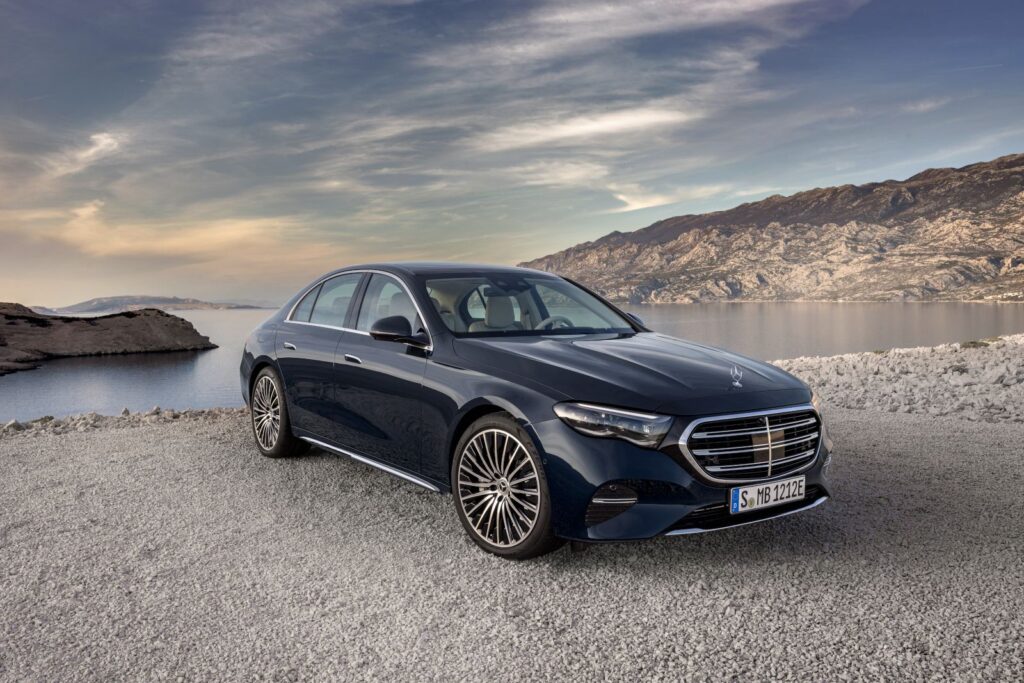
Large vehicles face severe parking limitations and mandatory transfer protocols at Badrinath, which introduces unnecessary delays into an already compressed darshan window. Our fleet strategy prioritizes direct-access vehicles to eliminate these wait times. A Toyota Innova Crysta rental for Badrinath trip accesses inner parking zones that coaches cannot reach. The turning radius handles tight hairpin approaches near the temple forecourt. The ground clearance manages road surface irregularities on the Joshimath–Badrinath stretch without passenger discomfort. For a family of four to six, this is the operationally correct vehicle — not a luxury preference.
The driver competence question is separate from the vehicle question. A mountain-rated chauffeur reads road conditions, knows checkpoint enforcement timings, and makes halt decisions based on safety — not passenger pressure. Certified mountain chauffeurs carry extensive mountain-driving experience and internal rigorous safety training, and are briefed on current Char Dham corridor enforcement protocols before departure. This is not a standard feature of local Haridwar cab bookings.
Recommended Overnight Staging Protocol:
- Leg 1 — Delhi to Rishikesh (~240 km): Overnight halt. Driver rest and route briefing.
- Leg 2 — Rishikesh to Joshimath (~255 km): Overnight halt at Joshimath. Last comfortable town before the final corridor.
- Leg 3 — Joshimath to Badrinath (depart 05:00): 45 km. Reach Badrinath by 06:30–07:00. Complete darshan, return to Joshimath by early afternoon.
- Leg 4 — Joshimath to Rudraprayag or Rishikesh: Clear Joshimath before 16:00. Halt at Rudraprayag or push to Rishikesh depending on group energy and traffic.
Compliance Architecture: Green Card, Trip Card & QR URN
Badrinath Yatra in 2026 runs on a three-layer compliance system. Skipping any layer means checkpoint rejection — no exceptions, no negotiations.
Layer 1 — Pilgrim Registration (QR URN): Register on the official Uttarakhand Char Dham Devasthanam portal before departure. Aadhaar details, photograph, and specific visit date are mandatory. A Unique Registration Number is issued via SMS. Carry the printed copy and digital copy both — mobile signal is unreliable between Joshimath and Badrinath.
Layer 2 — Commercial Vehicle Compliance (Green Card + Trip Card): All commercial vehicles on Char Dham routes must carry a valid Green Card and Trip Card, obtainable at greencard.uk.gov.in. The Trip Card links directly to your pilgrim registration. Vehicles without Green Card documentation are turned back at Char Dham entry checkpoints. This applies to every private cab, SUV, and MPV operating commercially on this route.
Layer 3 — BKTC VIP Darshan Process: The Badrinath Kedarnath Temple Committee (BKTC) offers a VIP Darshan facility for pilgrims seeking priority queue access. The process:
- Online booking opens on the official BKTC portal. Slots are date and time specific.
- A separate VIP Darshan fee applies — confirm current rates directly on the BKTC portal as fees are revised seasonally.
- Carry printed confirmation and original identity proof. Digital-only confirmation is not accepted at the VIP counter.
- VIP Darshan does not guarantee instant entry — it guarantees a designated queue lane. Arrival at the temple before 07:00 still produces the fastest overall darshan experience regardless of queue category.
Do-Dham Synchronization: Kedarnath Before Badrinath
The traditional Char Dham sequence places Yamunotri first, Gangotri second, Kedarnath third, and Badrinath last. Pilgrims completing Do-Dham — Kedarnath and Badrinath together — face a specific logistics challenge: the two shrines sit in different valleys, connected through Rudraprayag.
The Kedarnath return route exits via Sonprayag and Rudraprayag. The Badrinath approach continues from Rudraprayag through Karnaprayag and Chamoli. A well-structured Do-Dham itinerary uses Rudraprayag as the pivot — one night halt at Rudraprayag between the two shrines, departing for Badrinath the following morning.
For the complete Kedarnath logistics framework — Sonprayag bottleneck, IRCTC helicopter caveats, and pre-08:00 arrival strategy — review the Kedarnath Yatra private transfer guide before finalising your Do-Dham sequence.
Critical Safety Warnings
- Carry a pulse oximeter. At 3,133 metres, SpO2 below 90 requires immediate halt and assessment.
- Joshimath land subsidence zones are marked with restricted driving areas in 2026. Follow BRO diversion boards — do not attempt unmarked shortcuts.
- Last reliable ATM — Joshimath. Carry sufficient cash beyond this point. Badrinath town operates on a cash economy for most services.
- BSNL SIM or BSNL roaming provides the most consistent signal on the Joshimath–Badrinath corridor. Airtel and Jio connectivity drops post-Joshimath.
- Medical screening and fitness assessments are highly advised for pilgrims aged 55+. Authorities may conduct random checks — carry a fitness certificate if you have pre-existing cardiac, respiratory, or diabetic conditions.
Why Spontaneous Planning Fails at Badrinath
Daily pilgrim caps fill in advance during May and June. VIP Darshan slots close weeks before the visit date. Green Card applications require processing time — walk-in same-day compliance is not available. The Joshimath–Badrinath corridor has active geological restrictions that change without public advance notice.
Every variable above is manageable with a 10–14 day advance planning window. None of it is manageable on arrival day. Contact us for custom itineraries before your dates are locked — vehicle compliance, darshan slot coordination, and overnight staging all require confirmed lead time.
Q1. How many days are required for Badrinath Yatra from Delhi?
Minimum 4 days: Day 1 Delhi–Rishikesh, Day 2 Rishikesh–Joshimath, Day 3 Joshimath–Badrinath darshan and return to Joshimath, Day 4 Joshimath–Delhi. For Do-Dham combining Kedarnath, add 3 additional days minimum.
Q2. Is Badrinath Yatra physically difficult?
Badrinath is road-accessible and requires no mandatory trek. The primary challenge is altitude at 3,133 metres, which affects pilgrims with cardiac, respiratory, or hypertension conditions. The Joshimath to Badrinath drive is technically demanding for drivers on narrow mountain roads.
Q3. How do you avoid traffic on the Badrinath route?
Depart Joshimath before 06:00. Reach Badrinath between 06:30 and 07:00 before the 08:00–12:00 heavy congestion window. Complete darshan by 10:00 and begin return before afternoon traffic builds.
Q4. What is the cost of VIP Darshan at Badrinath?
BKTC VIP Darshan fees are revised seasonally. Confirm current rates directly on the official BKTC portal at the time of booking. Book online in advance as counter availability on arrival day is not guaranteed during peak season.